
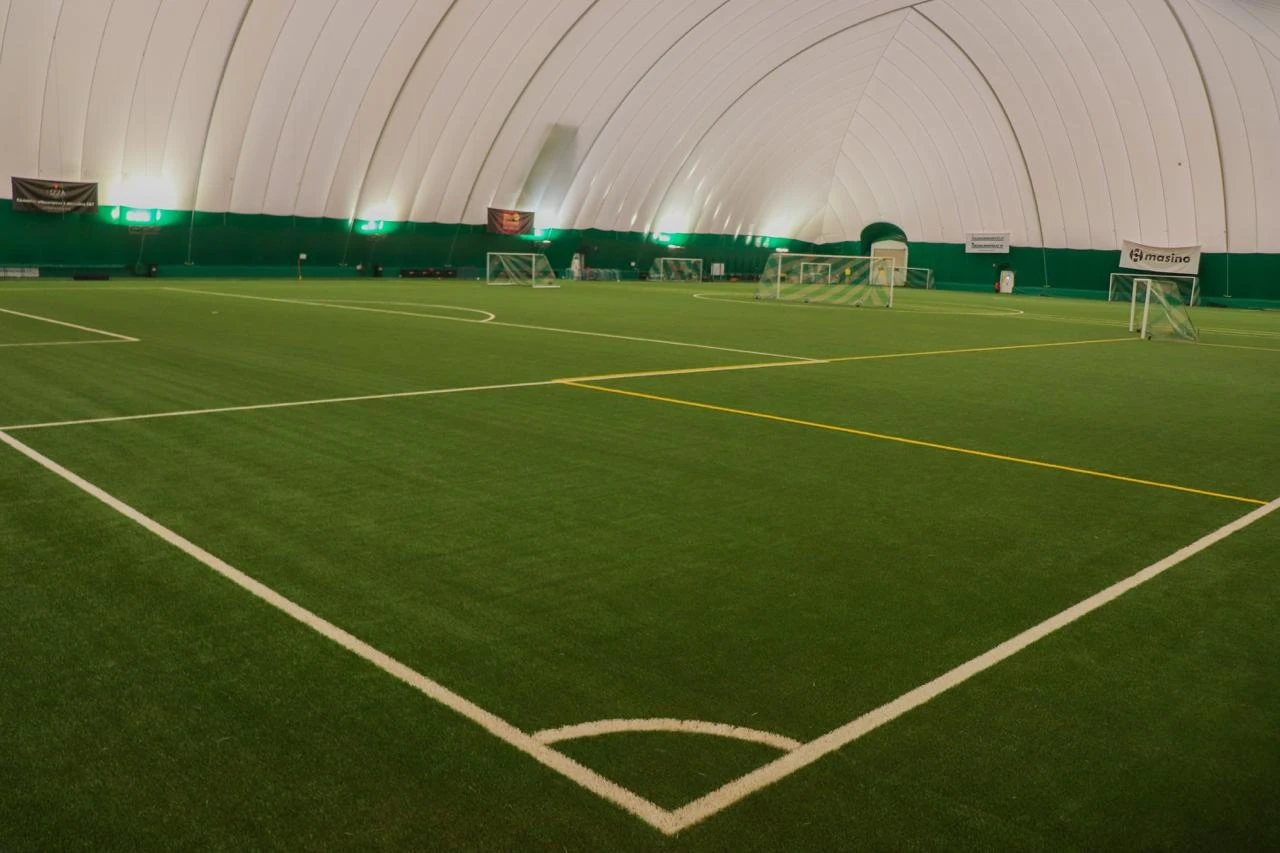
FIFA has updated its quality program for football artificial turf and introduced new certification requirements. These changes affect both which artificial turf systems can be approved and how field tests are conducted to ensure compliance with FIFA's standards.
To facilitate the transition, FIFA will continue to approve fields according to the 2015 rules until the end of 2025. This means that systems tested under the old requirements can still be certified during the current year, but from 2025 onwards, all new certifications must follow the updated 2024 rules.
Many wonder what the difference is between a FIFA laboratory test, a field test, and the certification process itself. These three parts are interconnected but serve different functions.
What is the difference between a FIFA Laboratory Test and FIFA Certification?
For an artificial turf field to be FIFA certified, it must pass both a field test and a verification process against an approved FIFA laboratory test. Simply passing the field test is not enough – the field must demonstrate equivalence to an artificial turf system that has already been approved in a laboratory test.
- FIFA Laboratory Test (Artificial Turf System Lab Test): The artificial turf system is tested in a FIFA-accredited laboratory before it can be used on a FIFA-certified field. The test evaluates ball behavior, wear resistance, shock absorption, rotational resistance, infill properties, and weather resistance. Only systems that pass the laboratory test are eligible for FIFA certification once installed. However, a laboratory test does not mean a specific field is certified – it only confirms that the system meets FIFA standards.
- FIFA Field Test (As-installed Field Test): After installation, a FIFA field test is performed to ensure that the field actually performs according to FIFA requirements. The test measures ball bounce, ball roll, shock absorption, surface evenness, and correct infill distribution. The field test is an essential step in the certification process but does not automatically mean the field receives FIFA certification.
- FIFA Certification (Field Verification to Approved System): FIFA only certifies a field if the field test results match an artificial turf system already approved in a FIFA laboratory test. FIFA certification confirms that both the system and the individual field meet FIFA's requirements. Once certified, the field receives FIFA Quality or FIFA Quality Pro status, valid for 1 year (Pro) or 3 years (Quality) before re-testing is required.
Key Changes in FIFA 2024 Rules
The new certification requirements bring several technical changes that affect which systems and materials can be approved:
- Stricter Wear Tests: All systems must now pass 6,000 cycles in the Lisport XL test (previous requirement was 3,000 cycles for some systems).
- Changed Infill Rules: Systems using mineral infill cannot be certified as they are still being evaluated. This applies to all mineral-based infills – both standard sand and quartz as well as coated minerals.
- New Player Safety Tests: Critical Fall Height (CFH) and Head Injury Criterion (HIC 1000) are introduced to reduce the risk of head injuries during falls.
Why are Systems Using Mineral Infill Not Approved for FIFA Certification?
According to section 4.8 of the FIFA 2024 handbook, systems filled with mineral infill, stabilized with mineral infill, and non-filled systems are still under development and therefore cannot be certified. This applies to all mineral-based infills. Since these systems have not yet been fully evaluated, no field using mineral infill can be certified under the FIFA Quality Programme 2024.
What Does This Mean for You?
If you are planning to build a FIFA-certified field in 2025, you can still use a FIFA 2015-approved system, as the old code remains valid until the end of the year. After that, all new certifications must follow the FIFA 2024 code.
Do you have questions about how these changes affect your field or project? Don't hesitate to contact us. We are happy to help find the right solution that meets the new FIFA standards.