
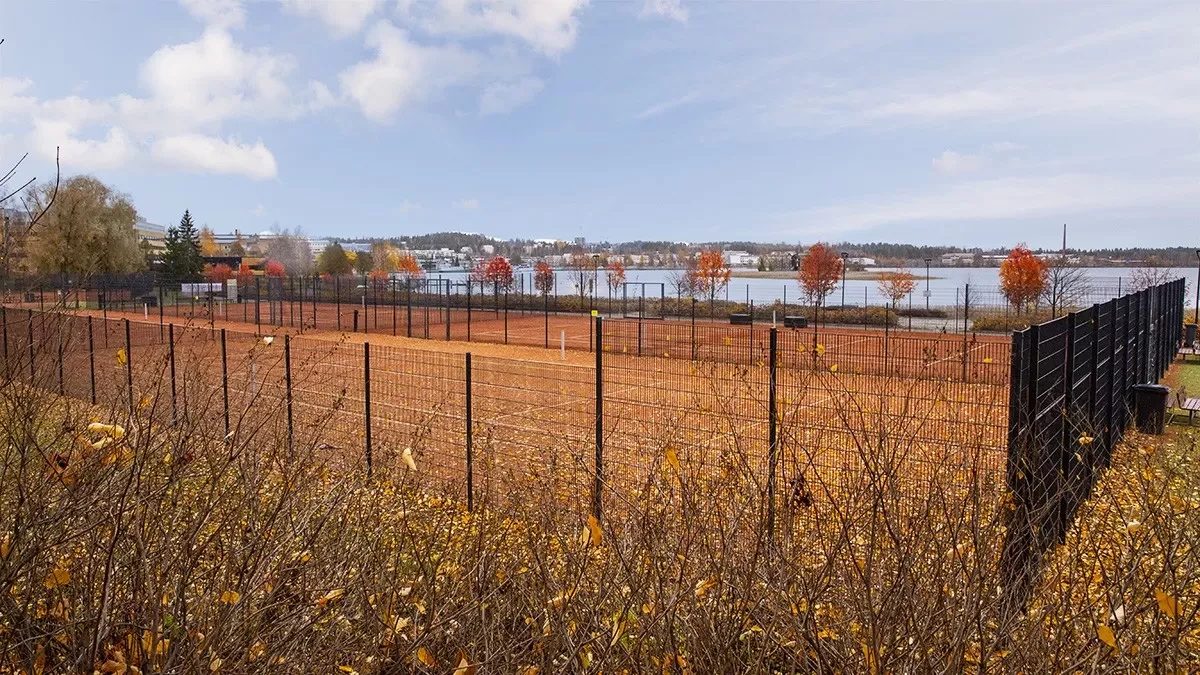
Artificial Grass Groundworks
1. Site Investigations and Subsoil
Before constructing the court, careful site investigations must be conducted. The court's base must be non-subsiding and as uniform as possible across the entire area.
In soft soil areas, the subsoil may sink under the weight of the structures unless reinforced. On frost-susceptible subsoil, structures must be designed to withstand frost heave.
2. Substructure
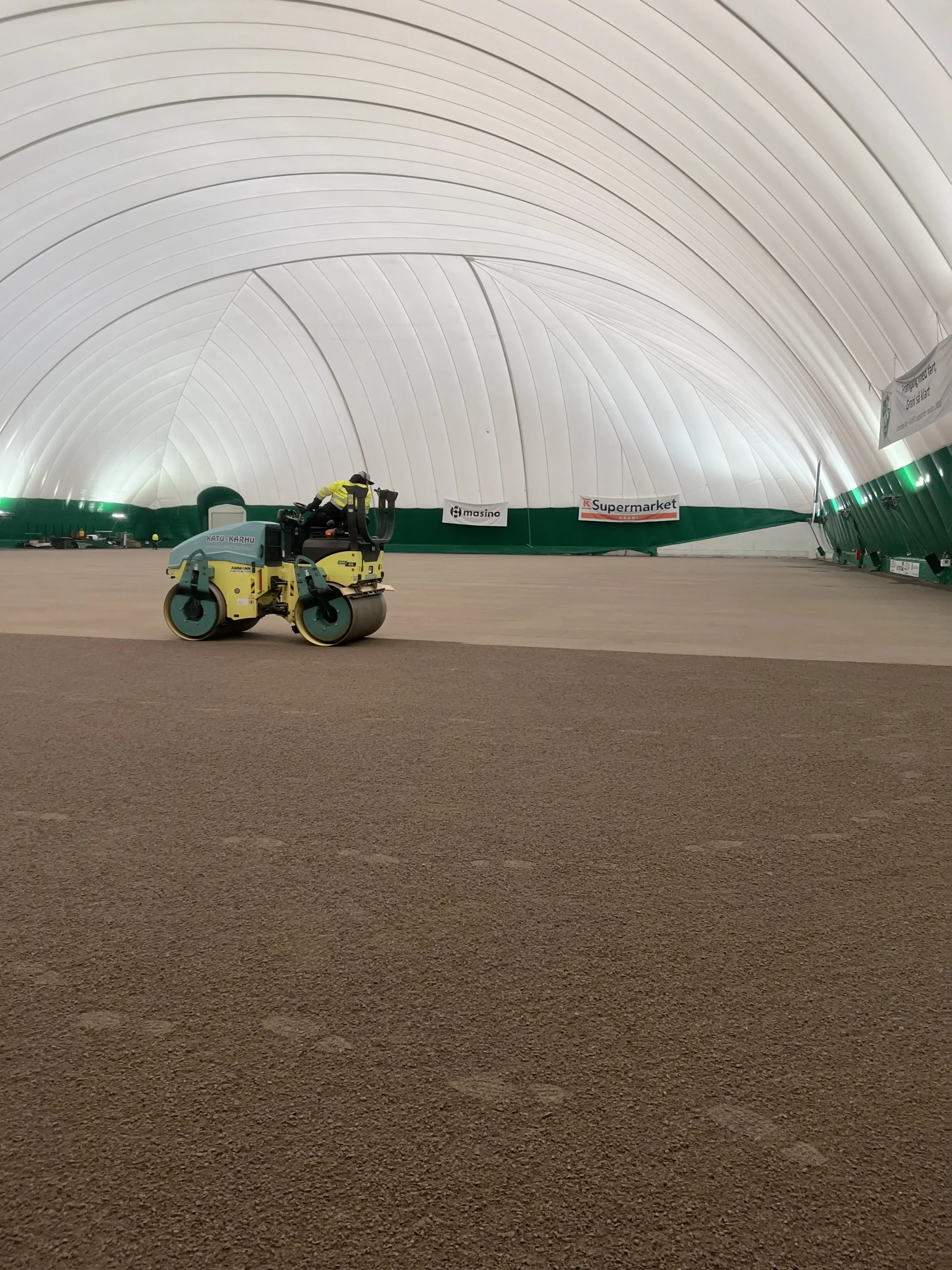
Underneath the sand-filled artificial grass, there must be precisely defined layers:
- • Leveling layer (Crushed stone 0/11 mm / stone dust 0/4 mm)
- • Bearing and distributing layer
- • Filter structure and frost insulation
- • Drainage layer (thickness 200 mm ±50 mm)
3. Drainage Systems
The surface structure must be highly water-permeable. The recommended permeability is at least 50 mm/h.
Drainage pipes are placed in the lowest structural layer, which prevents damage caused by frost and keeps the court playable even during rain.
"When you choose us, you can trust that we handle all details professionally from start to finish."
Evenness Requirements
Finnish Baseball (Pesäpallo) Courts
- Maximum height level deviation 20 mm
- Width deviation 0 mm
- Unevenness (over 3m distance) < 100 mm
Tennis Courts
- Allowed surface unevenness (3m straightedge) < 6 mm
- Side slope min. 0.5 %
- Slope deviation max. 50 % of planned
Artificial Grass Court Fencing
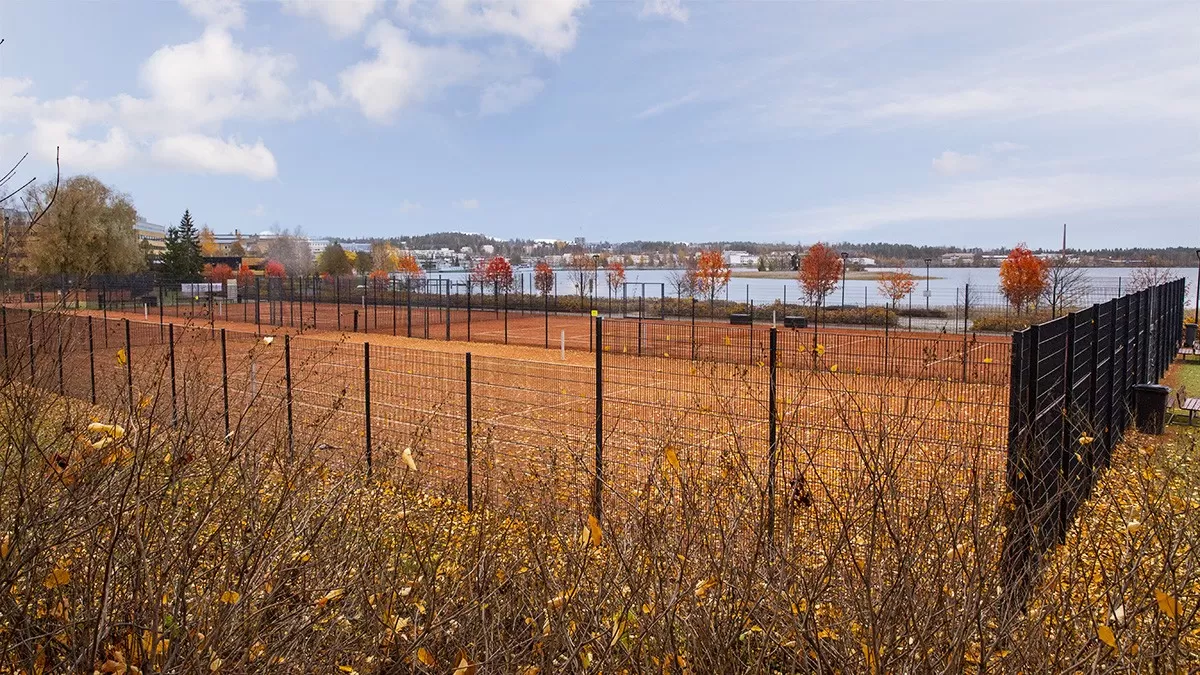
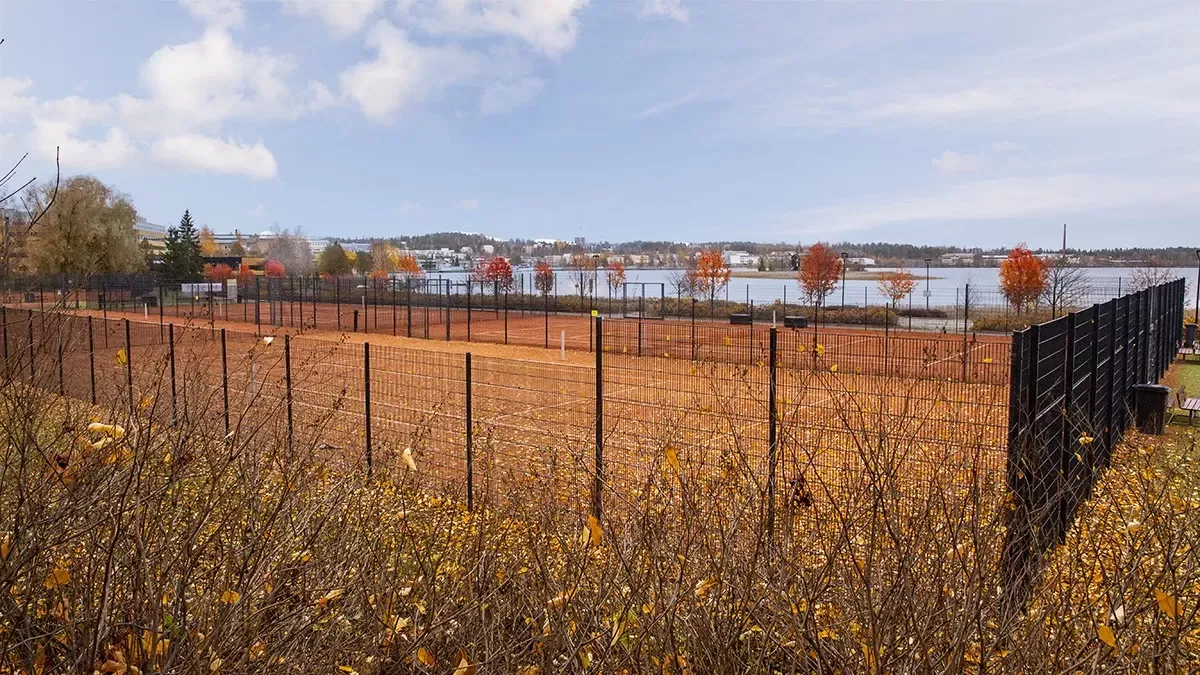
Our mission is to guarantee our customers a high-quality result, so we use a carefully selected partner for fencing services.
Our partner is an experienced professional in fencing, and we ensure that their service meets our customers' needs and expectations.
Long experience in installing fences for various courts enables us to always offer our customers the best possible solution and a seamless whole.
UKK
Frequently asked questions about groundworks and fencing
Get a Quote for Groundworks
Fill out the form and our expert will contact you within 24 hours. Let's plan together a package suitable for your needs.